Who is Funding Myanmar's War?
Who is funding Myanmar’s war?
Several vested parties exist in the volatile and ever-changing landscape of Myanmar. The country’s strategic positioning and abundance of natural resources allow for the victorious party to bring superpowers to their knees.
Several countries in ASEAN have differing stances. ASEAN’s founding principle of non-interference prevents them from doing anything militarily or economically, though some countries in ASEAN have established contact with the resistance and others continue trading with the junta.
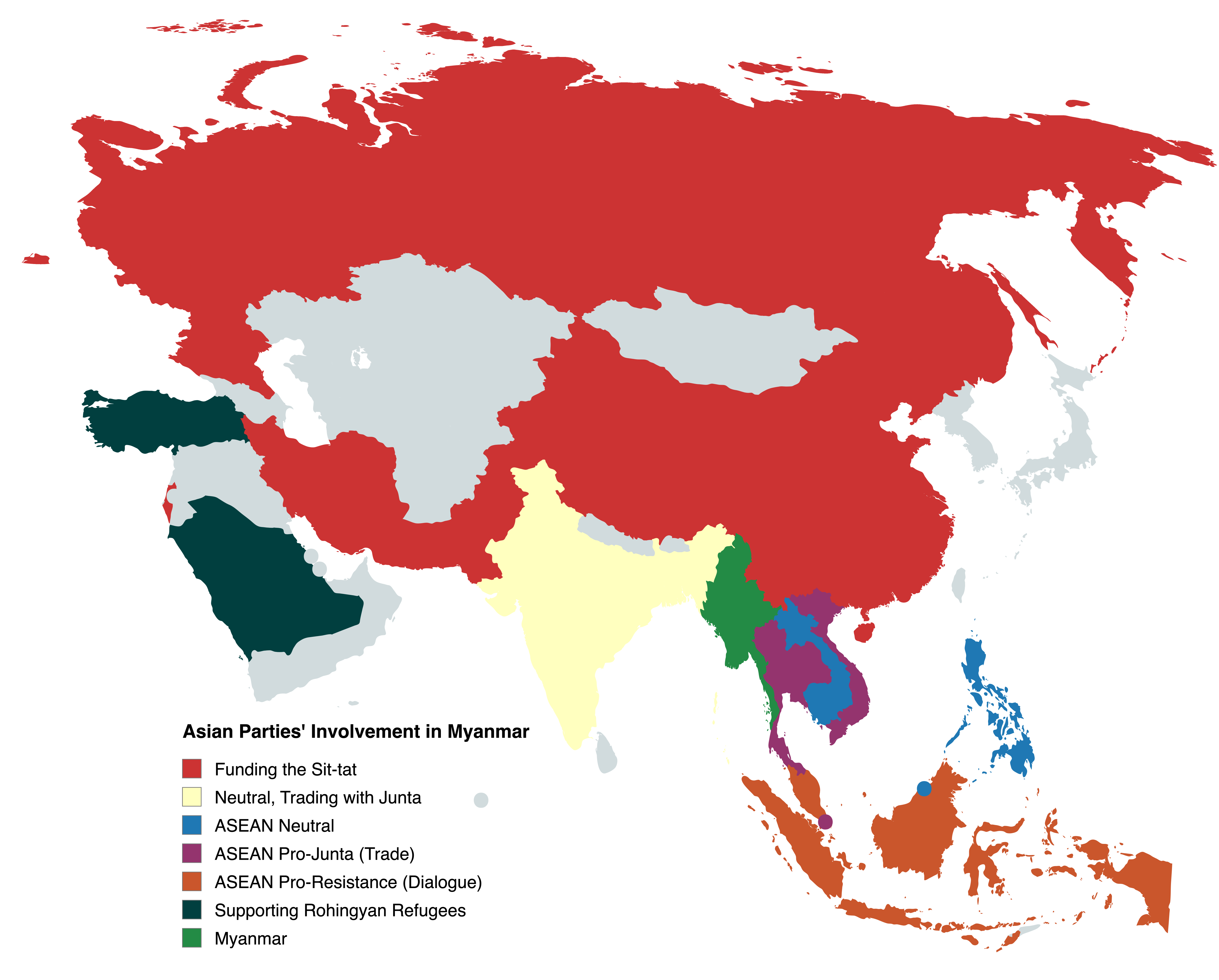
Some countries are outspoken about the Rohingya genocide without taking stances on the war. Notable examples of this include Turkey and Saudi Arabia, who have denounced both the former government and the current government about their crackdown on the Muslim Rohingya population. This is a surprising change in policy, considering Turkey and Saudi Arabia’s historical ties with certain anti-muslim regimes, such as the United States and Israel.
Pro-Junta Funding
Asia, due to proximity and historical ties to ethnic populations, have taken sides in the conflict. The biggest two are China and Russia, who are key supporters of the Tatmadaw (Sit-Tat), the government that is in power and has arms-trade agreements with them.
China
The main reason for China’s investment in the Sit-Tat’s takeover of Myanmar is access to the Andaman Sea and Bay of Bengal, which are strategic for trade routes. China’s vision of a trade route running through Myanmar would be realized given a decisive victory over all of the region for its Belt and Road, particularly with its ports in Chittagong (Bangladesh), Gwadar (Pakistan), and Hambantoa (Sri Lanka).
According to an openly-sourced map of the conflict, several resistance forces control territory that blocks ideal trade routes between China and ports on the Andaman Sea and Indian Ocean (through the Bay of Bengal).
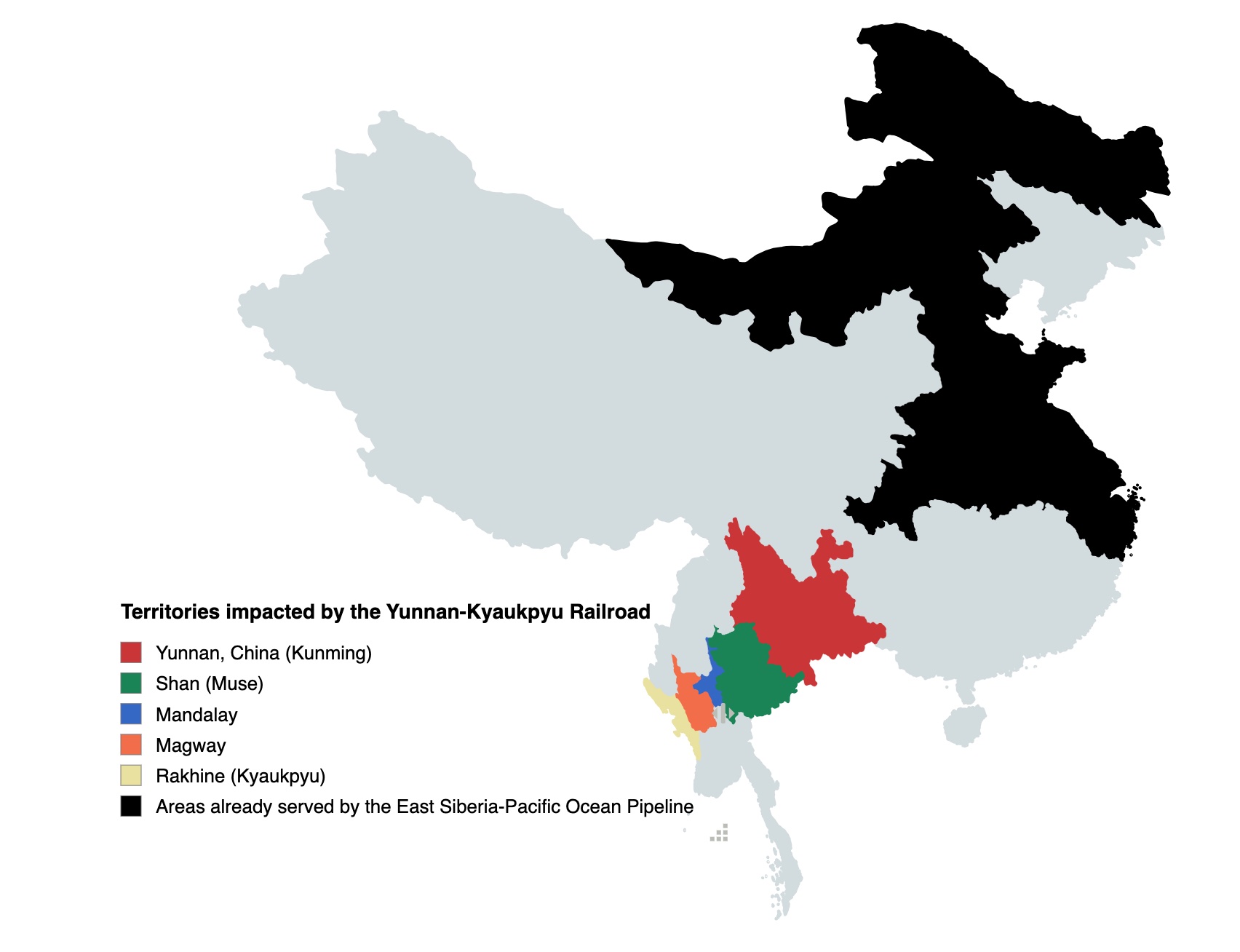
The ideal route, from Kunming, in Yunnan, China, to Yangon and Kyaukpyu, vital ports in Myanmar, would allow China to completely circumnavigate the Himalayas and would decrease India’s influence in the region, creating a lesser interest in the Siliguri corridor. As such, it would remove one of the main hindrances to China’s Belt and Road Initiative (BRI).
One of the routes that has been proposed by China that would be instrumental to the BRI. This one runs from Yunnan to Kyaukpyu, which sits on the Bay of Bengal. This route would run through Muse, on the border, through Mandalay (a major city under the control of the Sit-Tat), down to Kyaukpyu. Construction on the Muse-Mandalay stretch of the railroad has begun, and the stretch from Mandalay to Yangon is projected to be done when more feasible, due to a huge amount of territorial dispute.
India
India maintains a balancing act, where it continues humanitarian aid to Chin people (due to a high Mizo population that is ethnically and historically close) and trades with the active junta, effectively continuing to fund them.
Russia
Russia, the other primary funder (and arms trader) of the junta, has its eyes on the same trade route – this time, to send oil to China. Though it has the Eastern Siberia-Pacific Ocean pipeline (ESPO), which allows Russia to funnel oil directly into mainland China through the Sino-Russian border, the whole of Yunnan (of which Kunming is the capital) is relatively isolated from the rest of the country due to mountainous terrain, which makes land transport from the ESPO infeasible and air transport a complete pipe dream. As such, Kunming’s gas prices skyrocketed (though the Chinese National Development and Reform Commission have found ways to transport oil that don’t involve the Yangon-Kunming route).
Pro-Resistance funding
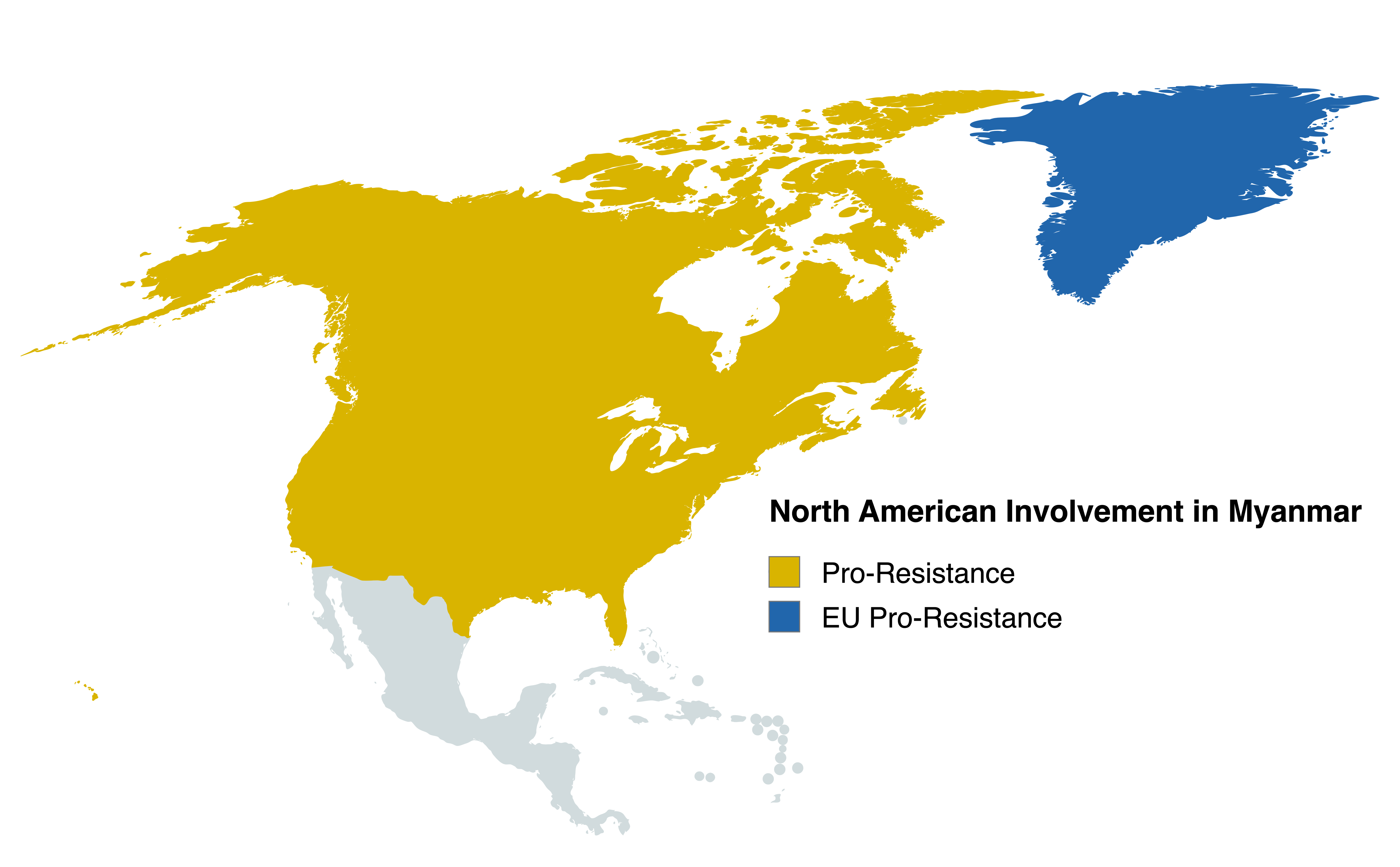
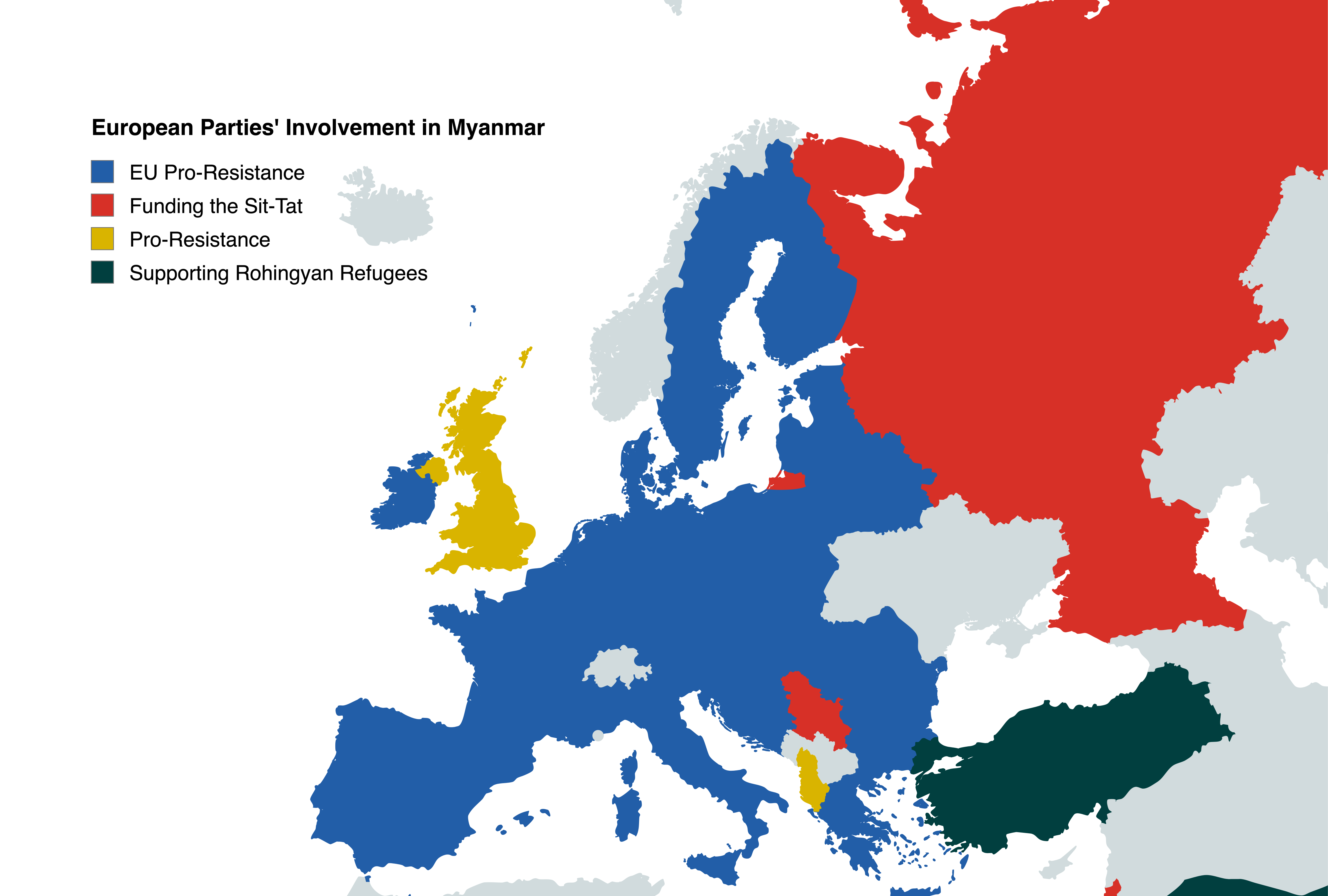
Despite being endorsed (or, in some cases, supported illicitly) by several countries, most of which are in the EU or the general West, most funding happens from the Burmese diaspora. Millions of Burmese people live abroad in places like the US, Thailand, Singapore, Australia, and Europe, and these people raise funds for ethnic insurgent groups through platforms like Facebook, Telegram, PayPal, and GoFundMe-style events and campaigns. Raffles are also used, with prizes like iPhones promised to the winner with a $5 to $10 buy-in.
A major theater of the war is the economics, since both sides need money for arms and try their hardest to prevent their adversaries from getting funds. The war has been a spectacle in its use of internet to raise awareness and garner funds from their overseas brethren.
Similarly, there are “adopt-a-soldier” programs which allow people to donate money to support soldiers for one-time purchases or monthly purchases. These options are particularly popular in NATO countries, particularly due to their price, with funding a month of meals costing around 15 USD per person.
The government-in-exile, the National Unity Government of Myanmar, has also been doing some fundraising of its own. It sells “revolution bonds”, effectively unofficial government savings bonds. Many people, particularly from the Burmese diaspora, buy them in solidarity, despite knowing that if the revolution loses, they will never see their money back. Similarly, the NUG (controversially) sells land that it claims the junta stole, which attracts wealthy Burmese people overseas. Millions have been raised like this.
*** Though several vested powers exist in support of the junta, resistance forces continue to hold territory due to modernized funding methods, tapping into the internet and a vested overseas population.