Myanmar: A Brief History
Few countries have been as wrought with violence as Myanmar. The country was founded in 1948. After a coup in 1962, the country became a junta dictatorship.
In 2011, the junta dissolved itself and handed power to a “civilian” government. Notably, political prisoners were released, and Aung San Suu Kyi, who was under house arrest, was released and allowed to run for office. Sanctions were lifted, foreign investment was encouraged, and censorship laws eased.
The military — the Tatmadaw — never fully let go, however; by law, they held 25% of all parliamentary seats by default, and control of key ministries (defense, home, and border). The military could veto constitutional changes and effectively remain the ultimate power-holder.
Aung San Suu Kyi was the leader of the opposition at the time, the National League for Democracy (the NLD).
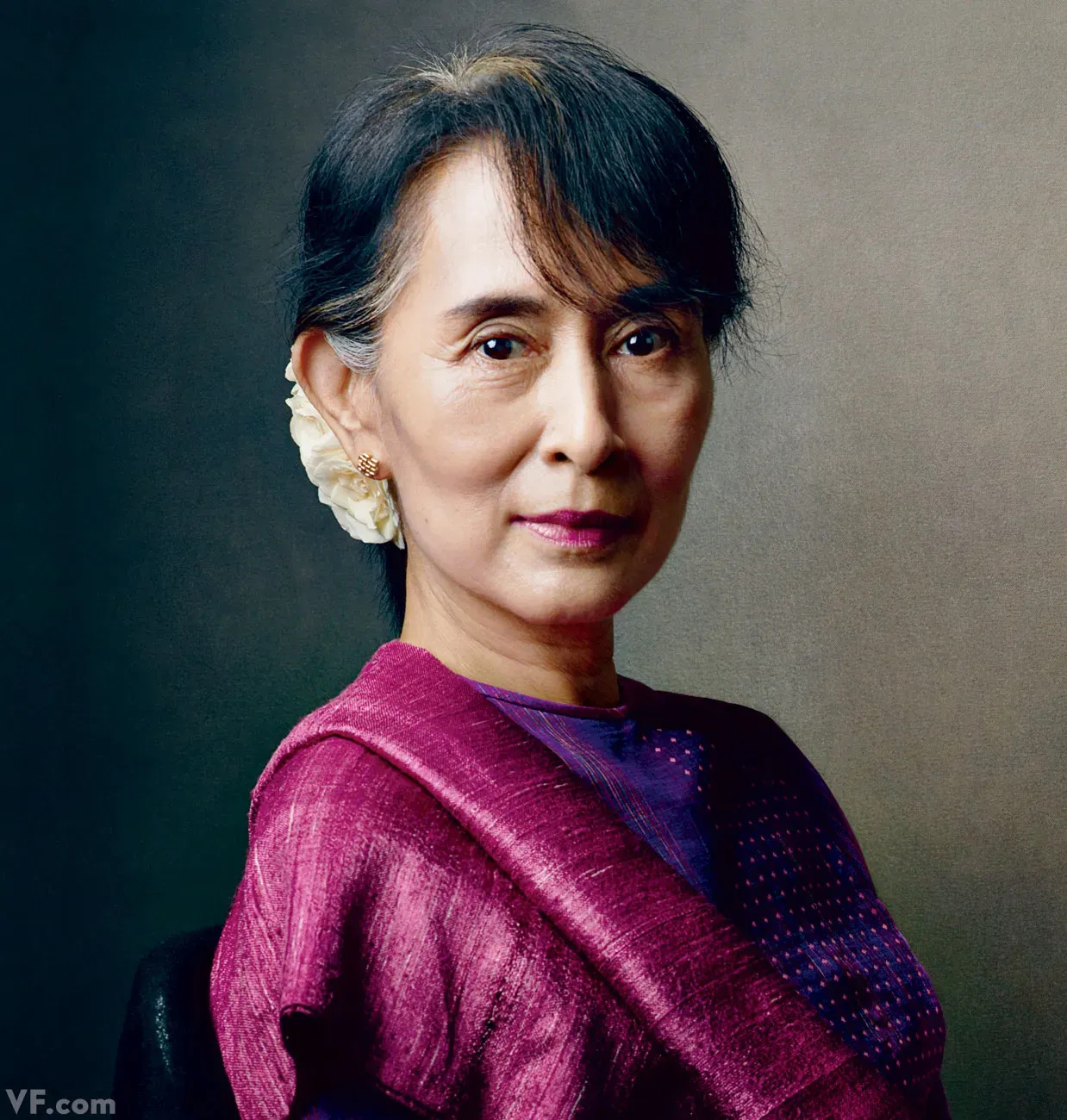
Before 2021, the NLD rose to the major political party in Myanmar, under the continued leadership of Aung San Suu Kyi. Toward the end of the NLD’s reign, they faced scrutiny in actions perpetrated by the Tatmadaw against ethnic groups, particularly the Rohingya Muslim people, who lived in Rakhine State before fleeing to Bangladesh, among other people.
Following the November 2020 elections (in which the NLD won), the Tatmadaw claimed voter fraud and seized power in February 2021. This ended the decade of gradual “openness” from the Republic of the Union of Myanmar.
The Tatmadaw instated the State Administration Council (SAC) as the interim government, promising an “official election” to come in December of 2025. The SAC was recognized by Russia and China. It was dissolved on July 31st of 2025, due to the declaration of emergency by the Tatmadaw expiring.
The National League for Democracy was deregistered by the Tatmadaw, and the people in the NLD formed the National Unity Government of Myanmar, acting as the government-in-exile and the officially recognized government of G7 and many member states of the United Nations.
Myanmar is home to approximately 135 recognized ethnic groups, as per the Tatmadaw (and the former NLD). There are many more that have been repeatedly denied recognition for political reasons; the most famous of these are the Rohingya and Chin people, who reside in the southwest.
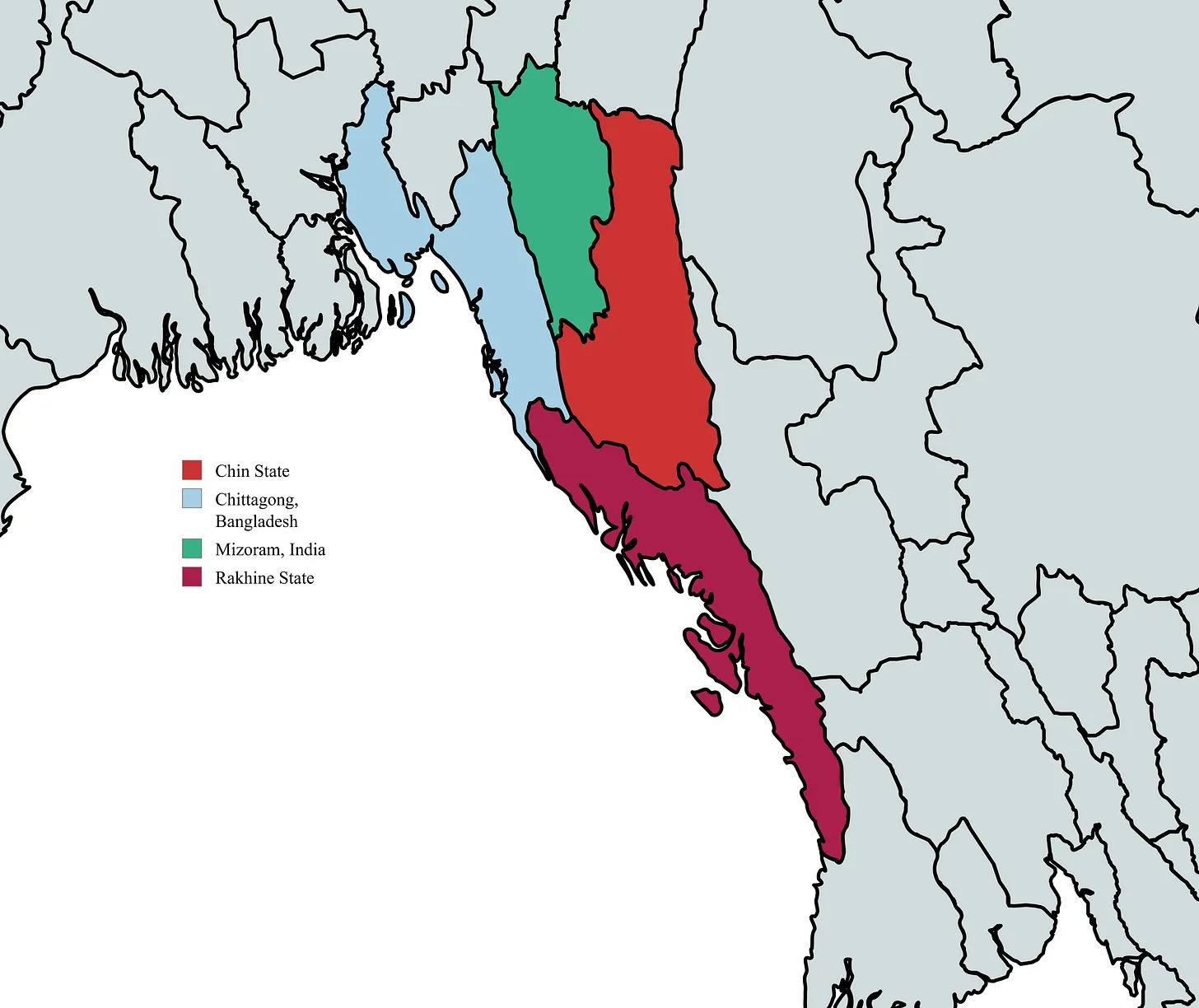
The Tatmadaw’s non-recognition (and active persecution) of tribes of these two states has led them to flee to other countries. Chittagong, in Bangladesh, has seen a large influx of Rohingya people, while Mizoram, in India, has seen an influx of Chin peoples.
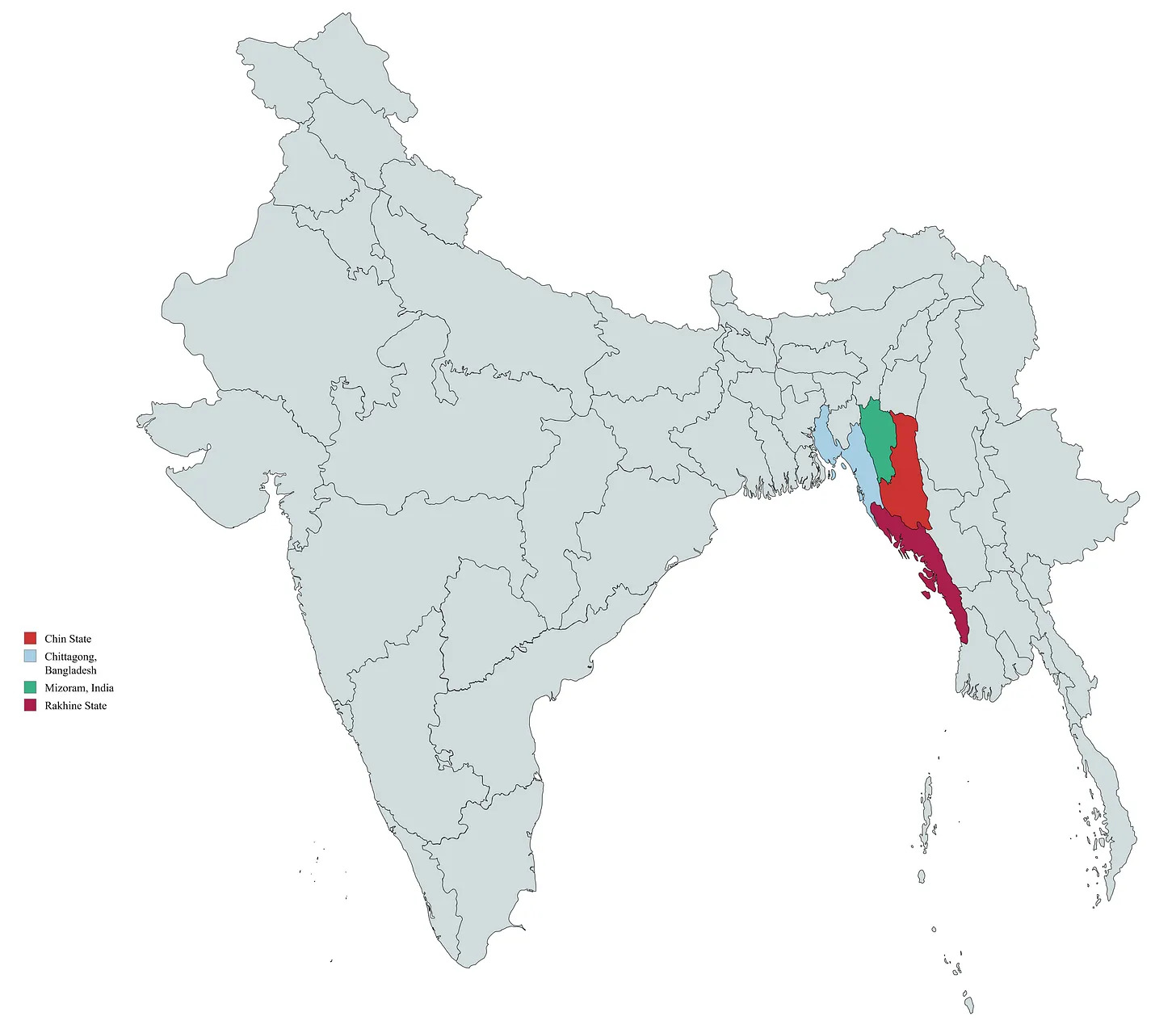
Throughout the conflict, multiple parties have held a vested interest in seeing various factions victorious. The most defined of these are Russia and China, who are highly interested in seeing the Tatmadaw, who is a major arms and trade partner, continue to thrive, while India maintains a more nuanced stance.
India’s stance is balanced due to its important northeastern population, who are ethnically and culturally close with the Burmese, and its overall friendliness and non-alliance with Burma. Indian insurgent activity, on the other hand, has been more common, particularly against the Tatmadaw in Kachin.
The United States, while denying direct involvement, has been accused by some analysts of funding rebel groups in Burma, particularly through USAID and other groups. The Free Burma Rangers also provide military training to rebel groups in the area, which was founded (and is run) by a David Eubank, who is a Veteran of the United States Army Special Forces.
As of October of 2025, the war continues to be a bitter stalemate between the two sides, with neither faction holding enough control over enough territory to declare probably victory. The Junta has captured most populus cities with the exception of Arakan and Chin-controlled regions.
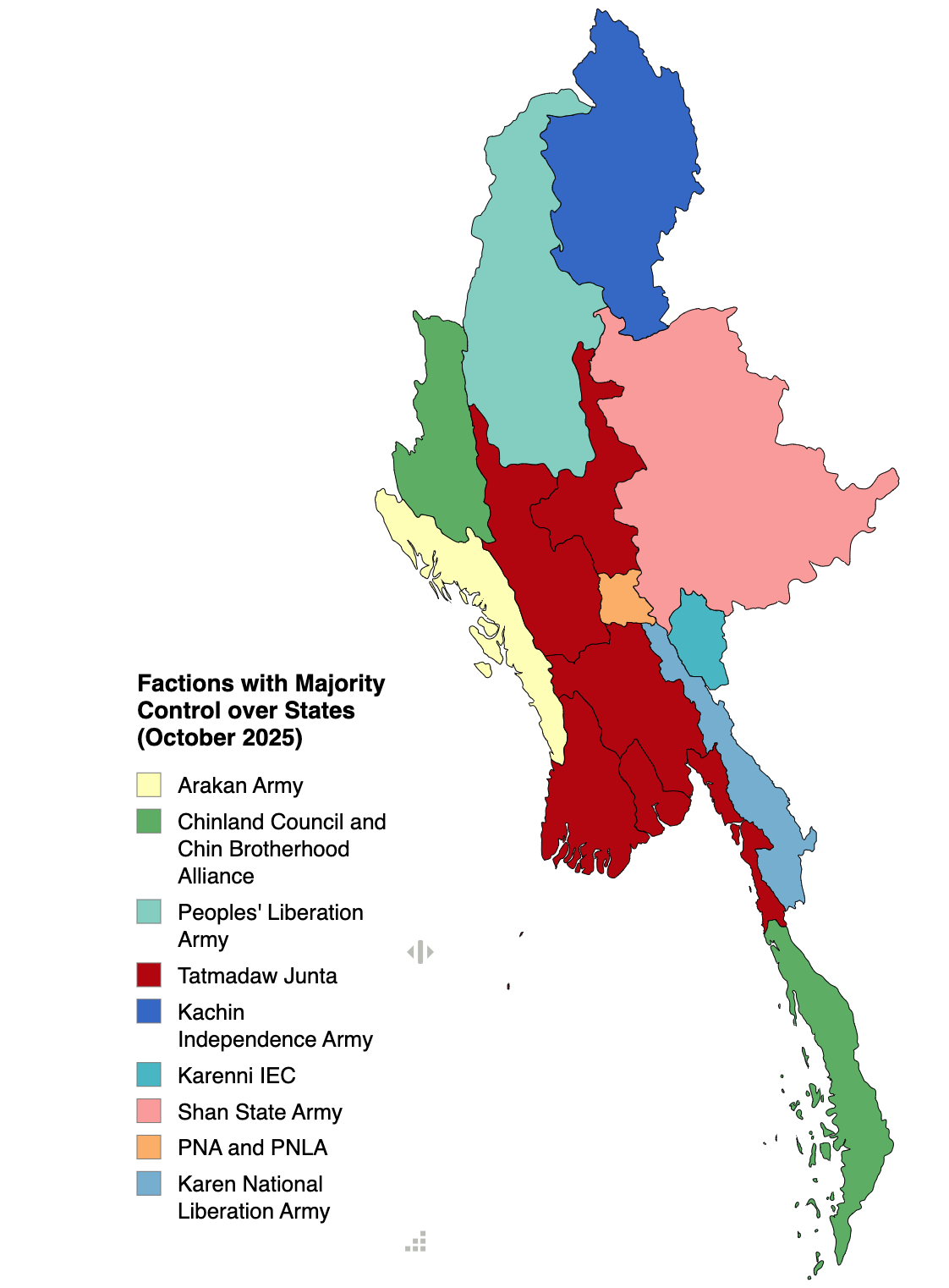
Note: The map neglects the presence of several insurgent groups, including the ZRA, PNLA, NDAA, and Indian insurgents, among others. Similarly, the actual territory controlled by these factions is much more nuanced, with terrain, cities in the region, and proximity to borders playing a more vital role.
*** Myanmar is a prime example of a proxy battleground, with several of the world’s most powerful countries playing opposing sides in the conflict. As long as higher powers maintain interest, the war will continue to be a bloody tug of war with no end in sight.